Why Arnica Montana
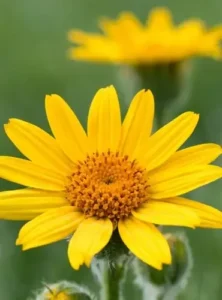
Arnica montana is a European flowering plant in the daisy family. Widespread across most of Europe, it grows on alpine meadows. “Arnica montana” translates from Latin to “mountain arnica” (or more literally, “arnica of the mountains”). It has a fascinating history, transitioning from a folk remedy for bumps and bruises to a subject of modern scientific research. While it has been trusted for centuries, the evidence from clinical studies today presents a more complex picture.
A Brief History of Arnica
The earliest known written records and illustrations of the plant date back to the Middle Ages, with the first clear images appearing in a 1558 herbal book by the physician Matthiolus. The plant’s medicinal use began to be described in detail in the early 17th century.
Arnica reached the height of its popularity in the 18th century, becoming the subject of many scientific dissertations. Its potent effects, even in small doses, were noted, and it is said to have greatly influenced Samuel Hahnemann, the founder of homeopathy. It was around this time that arnica was also introduced to English gardens.
Today, arnica is widely available in topical forms like creams and gels. In 1986, the German Commission E, a scientific advisory board for herbal medicine, approved the external use of arnica flower heads for treating injuries and rheumatic muscle and joint problems.
Effects, Mechanisms, and the Scientific Evidence
Arnica is best known for its anti-inflammatory and pain-relieving (analgesic) properties. The primary active compounds believed to be responsible for these effects are sesquiterpene lactones, specifically helenalin and dihydrohelenalin.
While the traditional use is extensive and laboratory studies show promise, clinical trials on humans have produced mixed and inconclusive results.
Most clinical research on Arnica focuses on post-surgical recovery because that provides a controlled environment (the timing, location, and extent of the trauma is known). In contrast, “everyday bruising” happens unpredictably and varies greatly from person to person, making it much harder to study.
The most direct evidence for everyday bruises comes from a 2006 clinical study published in the Journal of the Korean Society of Aesthetic Plastic Surgery. (https://e-aaps.org/m/journal/view.php?number=339)
The Setting: Unlike surgery studies, this research involved 15 patients (6 men, 9 women) who came to a clinic with general facial trauma, meaning bruises and swelling from common accidents, not medical procedures.
The Application: Patients applied an Arnica montana gel twice daily to the bruised area for one week.
The Results: All 15 patients reported feeling an effect. On average, they noticed improvement in 2.8 days. The study concluded the gel was a “safe, well-tolerated, and effective treatment” for this type of everyday swelling and bruising.
A Note on the Study: While promising, this is a small study without a placebo control group. Larger, more rigorous studies are needed to confirm these results, but it remains the most relevant clinical evidence for non-surgical bruises.
How to Use Arnica for Everyday Bruising
If you want to try Arnica for a common bump or bruise, here is the safest and most effective approach based on the evidence:
Choose the Right Form: Stick to topical gels, creams, or ointments made from Arnica montana. These are applied directly to the skin.
Apply Correctly: Use it 2-3 times daily on the bruised area. The 2006 study showed results within approximately 3 days.
Know When to Avoid It:
Do not apply it to broken skin, open wounds, or rashes.
Do not take raw Arnica or traditional tinctures by mouth, as this is toxic and can cause serious side effects. Only highly diluted homeopathic tablets are considered safe for oral use.
Allergies: If you are allergic to plants in the daisy family (Asteraceae), such as ragweed, chrysanthemums, marigolds, or sunflowers, you may also be allergic to arnica. You might want to perform a patch test on a small area of skin first.
Pregnancy & Breastfeeding: Avoid using arnica, as it has been documented to stimulate the uterus.